Having carried out the necessary concrete repairs and completed the reinforced concrete topping on all floors, the SealteQ project team in Leiden is now installing the cathodic protection system on the selected floor areas.


The content of this page has been translated automatically and may contain minor errors.
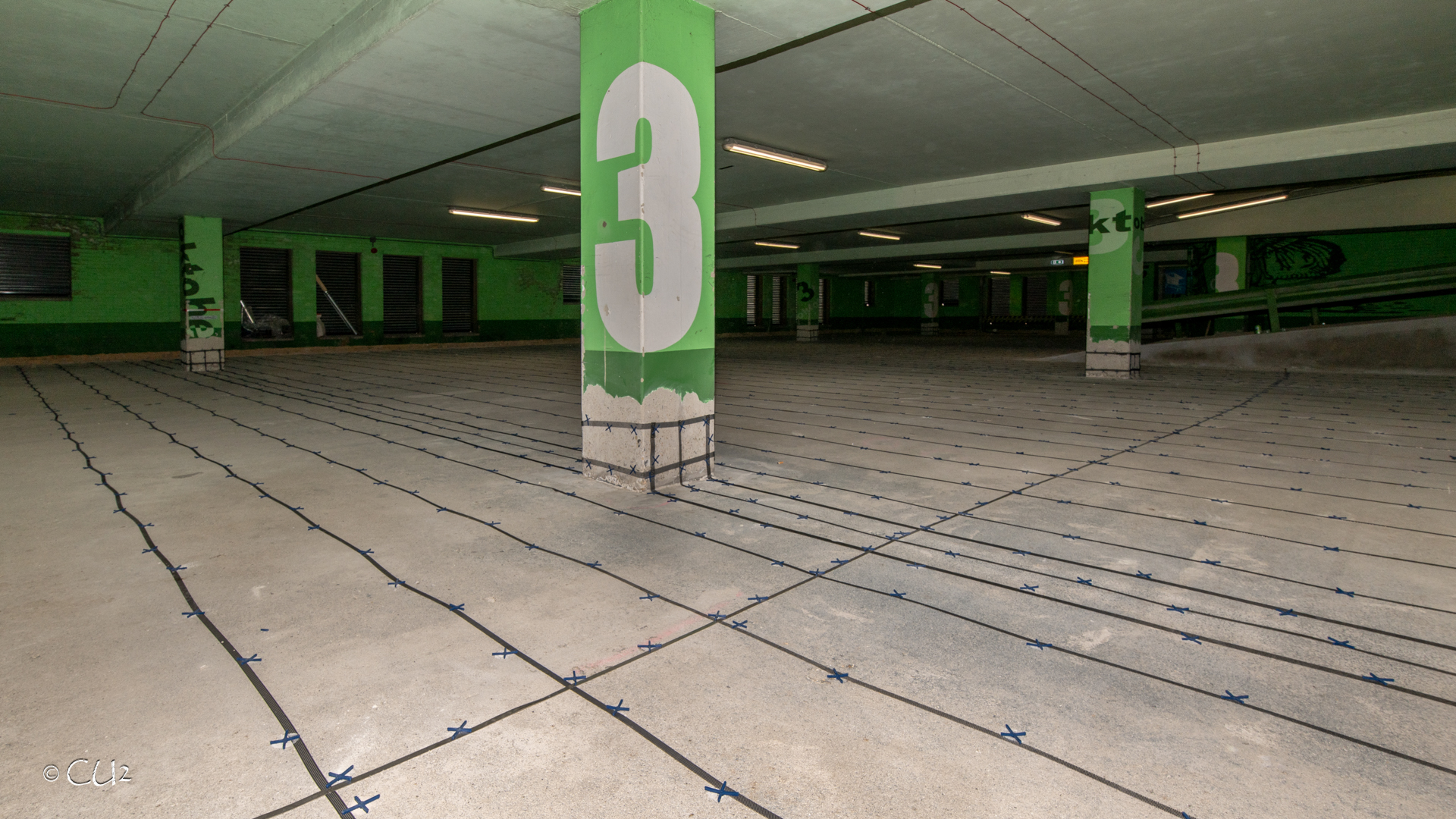
Cathodic protection for the Haarlemmerstraat car park in Leiden
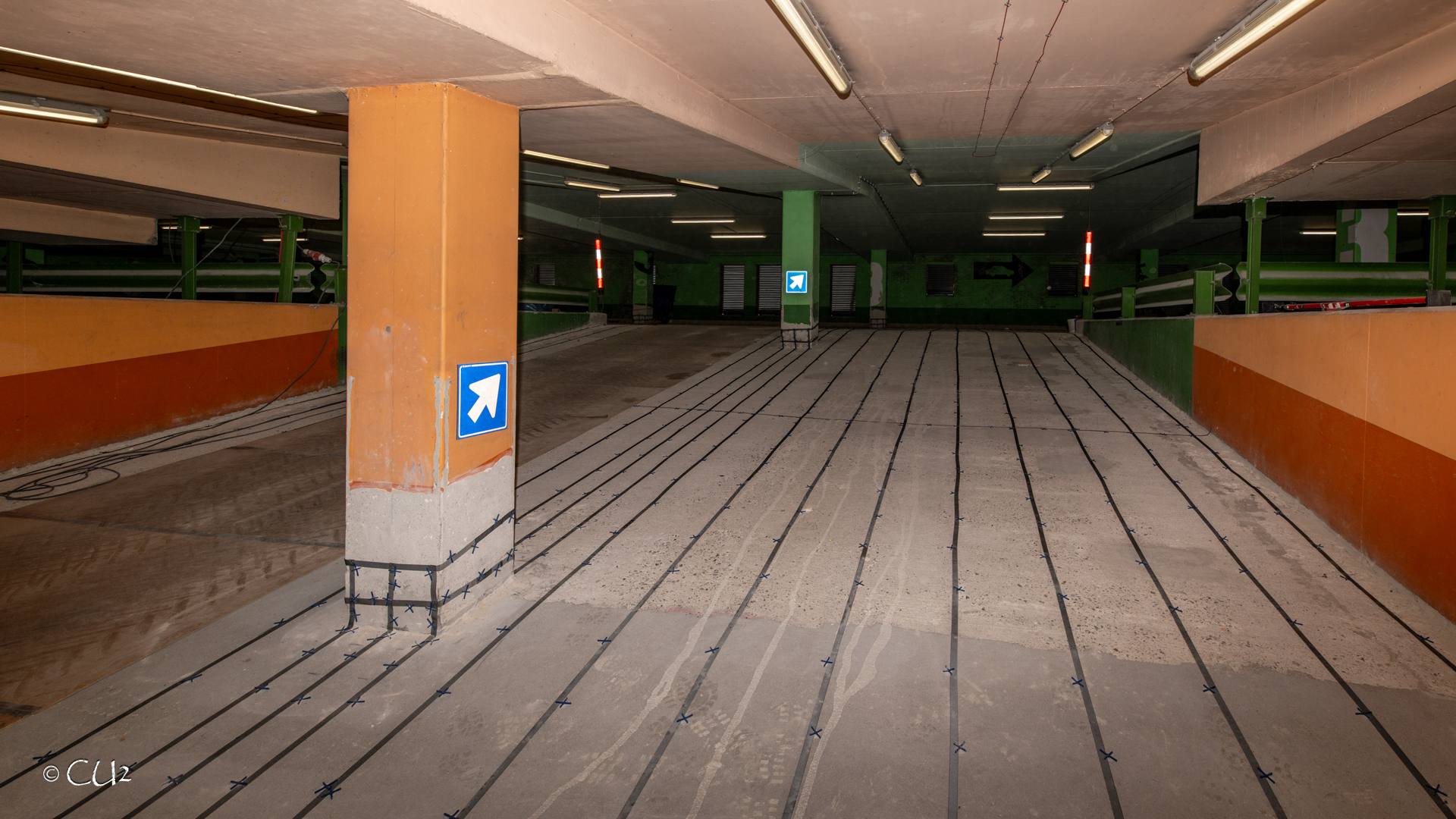
On the basis of thorough preliminary investigations, including potential and coverage measurements, an optimised application of the cathodic protection system was achieved. As a result, some floors are fully protected, whilst other storey floors – where de-icing salts had not penetrated the entire surface – are protected only in the critical areas.
Some floors have been pre-treated with a conductive mortar layer to rectify the insufficient concrete cover. If the cover is insufficient, low-resistance paths may form, resulting in short circuits or an uneven distribution of current.
Once the surface has dried sufficiently, titanium strips are fixed to it using plastic clips and welded together to the current distributor strips. The zoning, at approximately 500 m² per zone, is fully in accordance with CROW CUR Recommendation 130 and NEN-ISO 12696.
Finally, sensors are fitted so that the system can be properly controlled once it is up and running and its performance can be continuously monitored.
Specialties
View the next project
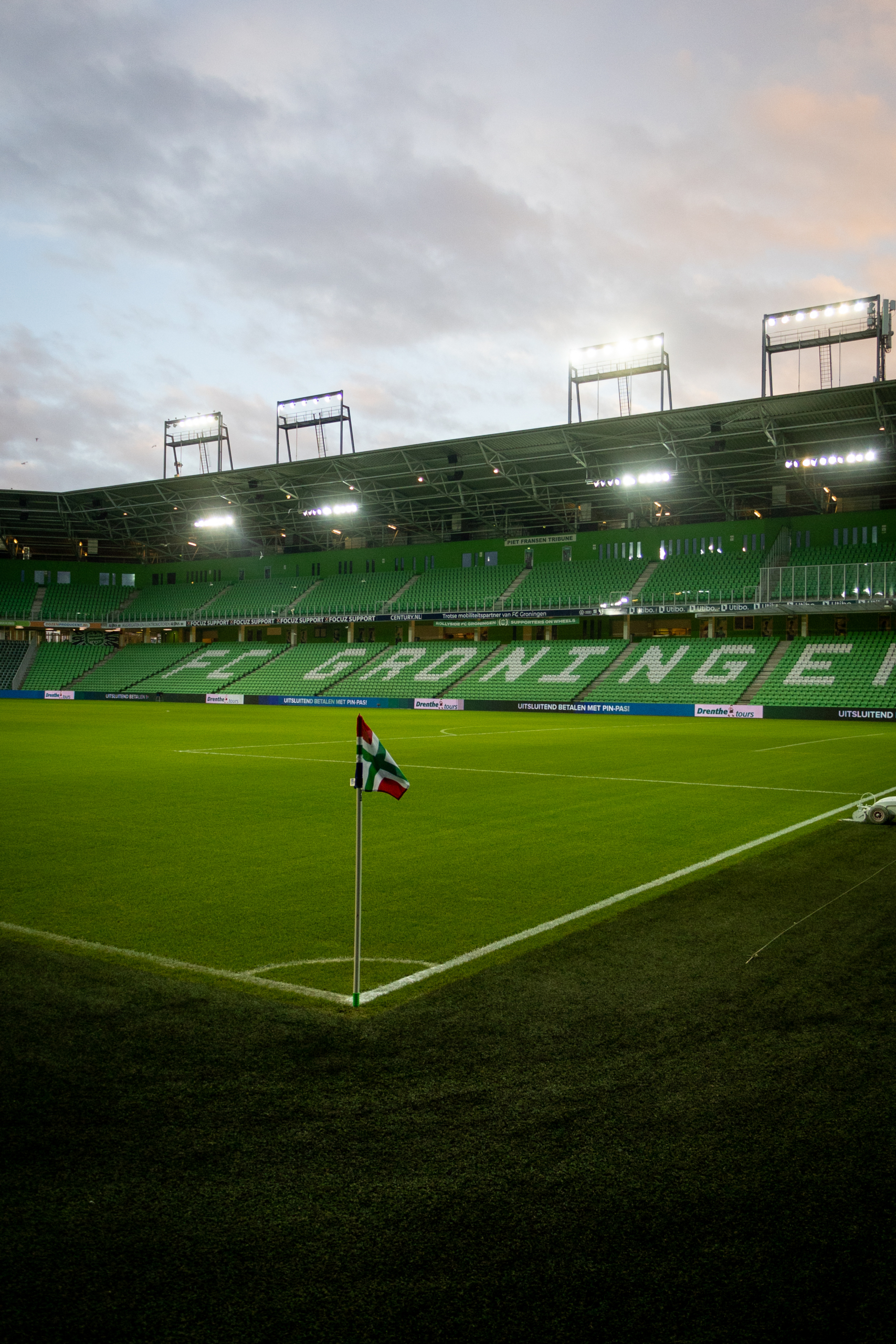
Anti-slip coating for steps on the North Stand at the Euroborg, Groningen
A football stadium places high demands on safety and appearance. The steps in the North Stand at the Euroborg in Groningen are subject to heavy daily use and must remain safe to walk on in all weather conditions. Commissioned by VasteState, SealteQ has applied an anti-slip finish to approximately 300 steps using the BFS-Triflex system.